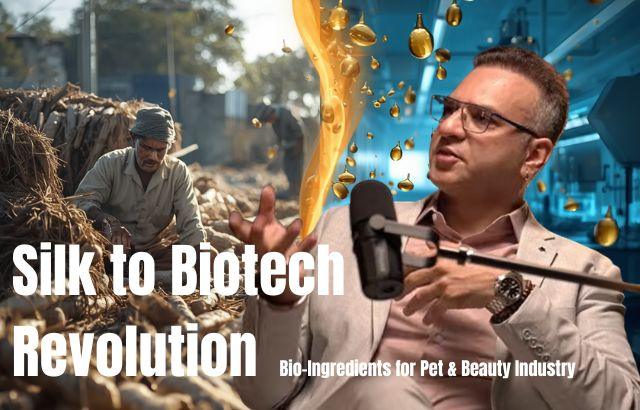
What if a material once discarded as industrial waste could become the foundation of next-generation nutrition, sustainable health products, and global biotechnology innovation?
For decades, silkworm pupae were treated as nothing more than byproducts of the silk industry—useful only for low-value applications or simply discarded. But behind the scenes of India’s traditional silk ecosystem, a quiet transformation has been unfolding—one that could reshape the future of nutraceuticals, animal nutrition, and sustainable oils.
At the center of this shift is a bold idea: nothing in nature is waste—only untapped value.
The Turning Point: When Tradition Meets Science
The silk industry has long been rooted in craftsmanship, export trade, and textile heritage. But for some innovators, the limitations of this traditional model became impossible to ignore—high investment, low margins, and very little room for innovation.
Instead of continuing along the same path, a new direction emerged: applying biotechnology to silk itself.
What if silk wasn’t just a fabric—but a source of bioactive compounds, proteins, and essential fatty acids?
That question opened the door to something far more ambitious than textiles.
The Hidden Gold Inside Silkworm Pupae
Every year, massive quantities of silkworm pupae are generated as a byproduct of silk production. Traditionally discarded, this material turned out to be rich in:
- High-quality proteins
- Essential amino acids
- Natural oils with omega fatty acids
- Bioactive compounds with potential health applications
Instead of treating it as waste, innovators began extracting value from it—carefully transforming it into clean, usable ingredients for multiple industries.
A New Kind of Oil: Beyond Fish Oil and Plant Oils
One of the most surprising developments from this research is a new category of oil derived from silkworm pupae.
Unlike conventional omega sources like fish oil or flaxseed oil, this alternative is positioned as:
- Naturally derived and sustainable
- Free from oceanic contamination risks
- Rich in omega fatty acids (including omega 3, 6, and 9)
- Suitable for nutraceutical and wellness applications
Even more interesting is the concept that the body can convert its core components into essential forms typically obtained from marine sources.
Could this be the beginning of a major shift in how we think about essential fatty acids?
From Waste Problem to Rural Opportunity
This innovation is not just about science—it is also about impact.
By building a structured collection system around silk-producing regions, thousands of small silk reelers are now part of a value chain that transforms what was once waste into income.
Cold storage systems, daily collection networks, and quality monitoring have created a model where:
- Farmers earn more for better handling
- Waste is reduced dramatically
- Raw material quality improves for global applications
It’s a rare example of sustainability and profitability moving together.
Global Interest and the Road Ahead
With increasing demand for sustainable protein and oil sources, industries like pet nutrition, aquaculture, cosmetics, and pharmaceuticals are taking notice.
Early collaborations, product trials, and international exposure are already shaping a larger question:
Is silk about to move from textiles into biotechnology?
The answer may already be unfolding.
What You’ll Learn from the Full Conversation
This blog only scratches the surface.
In the full interview, you’ll discover:
- How silk waste became a multi-industry opportunity
- The science behind silk-derived omega oils
- Why global markets are now paying attention
- The challenges of building a biotech innovation from a traditional industry
- And what the future of “waste-to-wealth” really looks like
Watch the Full Interview
The real insights, stories, and turning points are best understood directly from the conversation.
👉 Watch the full interview here to explore how a traditional silk legacy is being reinvented into a global biotechnology opportunity.